Digital identity is broken. Almost everyone online relies on passwords, usernames, and centralized databases to prove who they are. These systems are outdated, insecure, and easy to exploit. Data breaches happen regularly, exposing millions of people’s personal information. In 2025, this problem has become impossible to ignore. This is where Web3 identity comes in
Web3 identity is emerging as a powerful solution. Built on blockchain technology, it allows people to control their digital identity without relying on a central authority. Instead of handing personal data to companies, users own, manage, and share only what is necessary.
According to the World Economic Forum, decentralized digital identity could become a global standard by 2035 as governments, enterprises, and individuals search for safer alternatives.
What Is Web3 Identity?
This refers to a system where your digital identity is owned by you, not stored on a company’s server. It is usually tied to a blockchain wallet and powered by technologies such as:
- Decentralized Identifiers (DIDs)
- Zero-Knowledge (ZK) proofs
- Soulbound tokens (SBTs)
With this, users can prove who they are — or prove specific facts about themselves — without revealing unnecessary information.
For example, instead of uploading your passport to dozens of platforms, you can simply prove that you are over 18 or that you passed KYC, without sharing your name, address, or ID number.
Real-World Web3 Identity Solutions
Several projects are already live and being used globally:
- Worldcoin – Proof of Personhood
Designed to prove that someone is a real human, not a bot, without exposing personal identity. - Polygon ID
Uses zero-knowledge proofs to enable private and verifiable credentials for Web3 applications. - Civic Pass
Offers reusable identity verification for exchanges, DeFi platforms, and Web3 communities.
These tools are helping Web3 move beyond speculation into real-world infrastructure.
Why Web3 Identity Matters
It solves several major problems at once:
1. Privacy by Design
Users share only what is required. No more oversharing sensitive data just to sign up for an app.
2. Stronger Security
There is no central database to hack. Identity data is distributed and cryptographically protected.
3. Full Ownership
Your identity belongs to you, not a platform that can suspend or delete it.
4. Interoperability
One identity works across many platforms, apps, and blockchains.
This is a major shift from the current internet model, where every platform owns its own version of your identity.
Key Use Cases of Web3 Identity
Web3 identity is already being tested and deployed across multiple sectors.
Passwordless Login
Users can log into apps and websites using wallets instead of usernames and passwords.
Private Age Verification
Prove you are over a certain age without revealing your birthdate or identity.
Simplified KYC
Complete KYC once and reuse it across exchanges, wallets, and financial platforms.
Secure Voting Systems
Blockchain-based voting can use this to prevent fraud while preserving anonymity.
Healthcare & Education Records
Students and patients can carry verified credentials that are instantly verifiable worldwide.
The European Commission is already running decentralized identity pilot programs for digital public services.
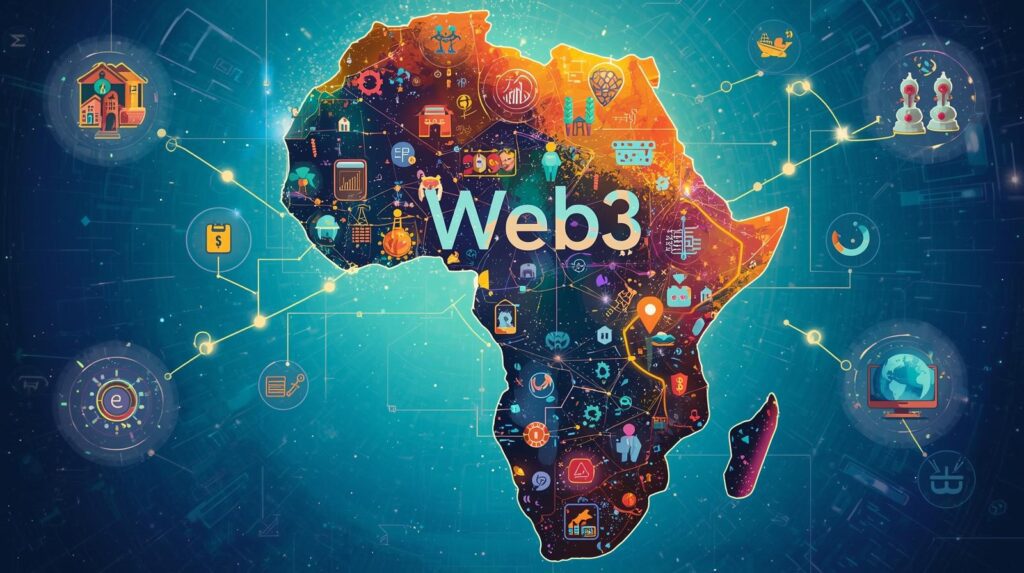
Africa’s Advantage in Web3 Identity Adoption
Africa has a unique opportunity to leapfrog outdated identity systems.
Millions of people across the continent lack formal identification, making it difficult to access banking, education, healthcare, and digital services. Web3 identity, combined with mobile wallets, offers a practical solution.
Benefits for Africa include:
- Faster access to financial services
- Cross-border identity verification
- Reduced fraud in government programs
- Portable credentials for students and workers
Countries already active in crypto adoption, such as Nigeria and Kenya, are well-positioned to integrate Web3 identity into fintech, remittances, and public services.
👉 Related AndroidRev read: Stablecoins in Africa: Adoption Trends and Real-World Use Cases
Challenges Still Facing Web3 Identity
Despite its promise, Web3 identity is not without challenges:
- User education: Many people still struggle with wallet security.
- Regulatory clarity: Governments are still defining how decentralized identity fits legal frameworks.
- UX issues: Onboarding must become simpler for mainstream users.
- Scam prevention: Fake credentials and social engineering remain risks.
However, steady improvements in wallet design, account abstraction, and regulation are reducing these barriers year by year.
How Web3 Identity Fits Into the Bigger Web3 Picture
Web3 identity is not a standalone product — it is core infrastructure.
It connects directly with:
- DeFi platforms (secure access without repeated KYC)
- Decentralized social networks
- AI agents and automation
- Blockchain gaming economies
- DAO governance systems
As Web3 matures, identity becomes the foundation that everything else is built on.
The Future of Digital Verification
By 2026, Web3 identity will have moved from theory to reality. Major institutions, governments, and startups are beginning to experiment with decentralized verification systems that respect privacy while also improving security.
While it will not replace the traditional internet overnight, it will quietly become part of everyday digital life. Logging in, proving identity, receiving credentials, and accessing services will become faster, safer, and user-owned.
For billions of people, especially in emerging markets, Web3 identity represents digital freedom.