Blockchain gaming is entering a new era. Following the hype of 2021 and the subsequent market crash, the industry has shifted toward more sustainable models. Game studios and investors are now focusing on long-term gameplay, better token economics, and real digital ownership — not quick-profit schemes. According to a recent report by DappRadar, blockchain games attracted more than 1.2 million daily active wallets in early 2025, making gaming the largest sector in Web3.
A Shift From “Play-to-Earn” to “Play-and-On”
The original play-to-earn model collapsed due to unsustainable token inflation, as seen in the downfall of Axie Infinity, reported by Reuters. But developers learned from the failures.
Today, games like Illuvium, Star Atlas, and Pixels are using play-and-own frameworks:
- Players earn real, scarce digital assets.
- Rewards are tied to skill, not grinding.
- Tokens have caps and burn mechanisms.
This shift is attracting mainstream gamers again.
Major Studios Are Entering Web3
2025 marks the year traditional gaming giants joined blockchain:
- Ubisoft expanded its Quartz platform.
- Square Enix launched a new NFT-integrated franchise.
- Epic Games Store lists 70+ Web3 titles
Coverage from The Verge confirms that mainstream adoption is accelerating.
Africa’s Growing Presence in Web3 Gaming
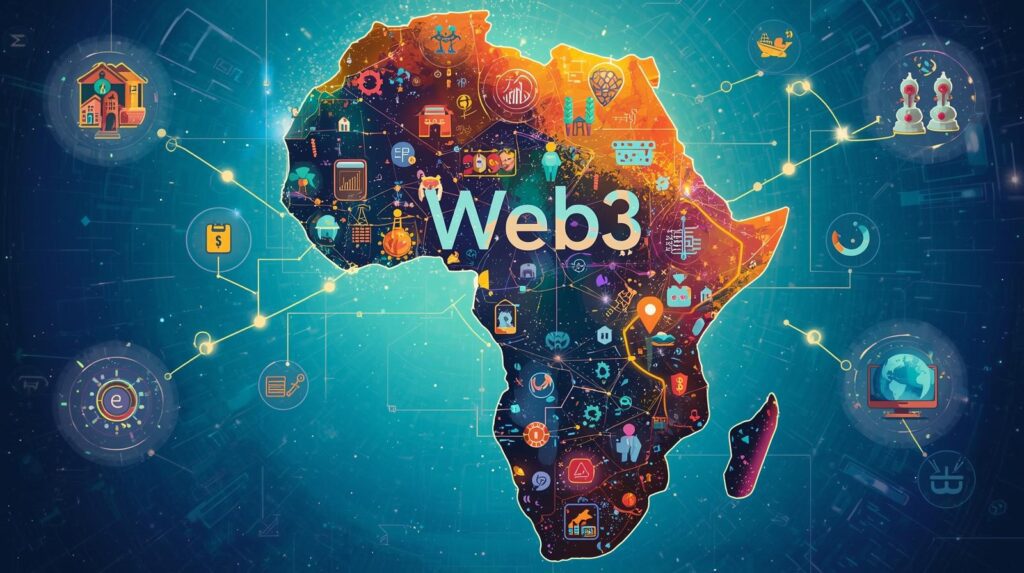
Africa is fast becoming one of the most important frontiers for blockchain gaming and Web3 adoption. With a young, tech-savvy population and increasing access to mobile technology, the continent is uniquely positioned to benefit from decentralized digital economies. Blockchain gaming, in particular, is gaining traction as it merges entertainment with real economic opportunity.
African youth, who make up the continent’s largest demographic, are driving adoption. Low-cost mobile devices and growing crypto awareness are fueling interest. Nigerian gamers are particularly active in titles like Planet IX and The Sandbox, according to CoinDesk.
This surge is not happening in isolation. Across Nigeria, Kenya, Ghana, and South Africa, young people are increasingly exploring play-to-earn and asset-owning game models as alternatives to traditional gaming ecosystems. Unlike conventional games, where in-game assets have no real-world value, blockchain games allow players to own, trade, and monetize digital items using NFTs and cryptocurrencies. For many African gamers, this represents both entertainment and the possibility of earning more income.
More Drivers for Blockchain Gaming in Africa
Mobile-first design has been a critical factor. Many blockchain gaming platforms are now optimized for smartphones, aligning perfectly with Africa’s dominant internet access model. As mobile data costs decrease and smartphone penetration increases, participation barriers continue to fall. Social media platforms and online communities are also amplifying awareness, with influencers and gaming guilds educating new users on onboarding, wallets, and gameplay strategies.
Another key driver is community-based gaming. African players often organize into guilds, pooling resources, sharing knowledge, and supporting newcomers. This cooperative approach mirrors traditional communal systems and accelerates adoption at the grassroots level. In some regions, blockchain gaming hubs and meetups are emerging, further strengthening the ecosystem.
Investment interest is also growing. Global Web3 gaming studios are increasingly looking toward Africa as both a market and a talent pool. Developers, artists, and community managers from the continent are finding opportunities in decentralized gaming projects, contributing to global platforms while remaining locally rooted.
The Road Ahead
As of 2025, blockchain gaming was no longer a fad — it had become an evolving, sustainable sector. With better design, real utility, and investment from major studios, Web3 gaming is poised to compete directly with traditional games.
Game quality has improved significantly, addressing early criticisms around poor graphics and repetitive gameplay. Today’s blockchain games emphasize fun first, with tokenomics designed to support long-term engagement rather than short-term speculation. Interoperability between games and metaverse platforms is also improving, allowing assets to move across ecosystems.
Regulatory clarity, while still developing, is expected to improve as governments better understand blockchain-based digital economies. This could unlock further growth by attracting institutional funding and mainstream publishers. For Africa, this presents an opportunity to leapfrog traditional gaming infrastructure and establish itself as a core player in the global Web3 gaming economy.
Welcome 2026!